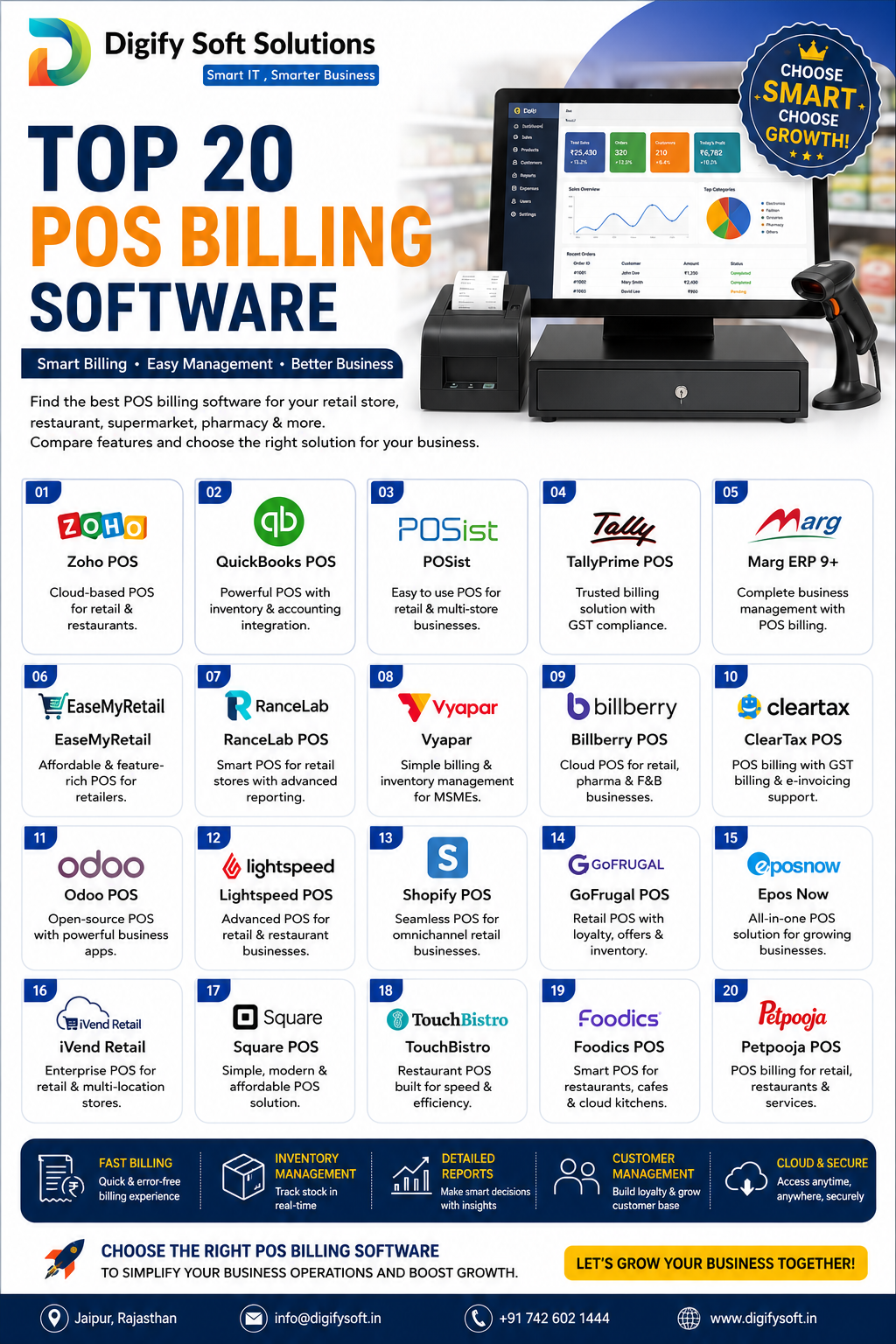
Small manufacturers used to be stuck choosing between doing everything manually or paying enterprise prices for an ERP built for companies ten times their size. Cloud-based ERP changed that math — no servers to maintain, lower upfront cost, and access from a phone on the shop floor instead of a fixed desktop. Here's what cloud ERP actually does for a small manufacturing business, what to look for, and the best options available in 2026.
📋 Table of Contents
- What Is Cloud-Based ERP for Small Manufacturers and How Does It Work?
- 10 Essential Features to Look For
- Benefits of Cloud ERP for Small Manufacturing Businesses
- Advantages and Disadvantages of Cloud ERP
- Best Cloud-Based ERP Software for Small Manufacturers in 2026
- How Cloud ERP Works Day to Day
- How to Set It Up (Implementation Steps)
- How to Know If It's Working
- How to Get Started
- Conclusion
- Frequently Asked Questions
What Is Cloud-Based ERP for Small Manufacturers and How Does It Work?
Cloud-based ERP is manufacturing management software hosted on remote servers rather than an on-site server the business owns and maintains. Instead of buying hardware, hiring IT staff to keep it running, and paying for major version upgrades, the business accesses the system over the internet, and the provider handles hosting, backups, and updates.
For a small manufacturer, it works as one connected loop:
- Production and orders are entered — work orders, BOMs, and sales orders live in the same system.
- Inventory updates in real time — raw material, WIP, and finished goods stay accurate as production happens.
- Finance stays synced — GST invoicing and accounting update automatically from production and sales activity.
- Owners and managers access it remotely — from a phone or laptop, without being tied to a factory-floor desktop.
- Data feeds better decisions — dashboards show production efficiency, stock levels, and cash flow without waiting for a monthly report.
On DigifySoft, this loop runs with AI layered through every step — inventory forecasting, manufacturing process monitoring, and accounting automation all connected on one cloud backend, rather than cloud hosting alone with the same manual processes underneath.
10 Essential Features to Look For
- Real-time production and inventory tracking — not a delayed batch sync.
- GST-compliant billing — built in, not a third-party add-on.
- Affordable, modular pricing — pay for what a small business actually needs, not enterprise-tier bundles.
- Mobile access — checking production status or stock from a phone, not just a desktop.
- Fast implementation — weeks, not months, for a small manufacturer's scope.
- BOM and work order management — even simple, single-plant production needs this core structure.
- AI-based demand forecasting — helps small manufacturers avoid overstocking with limited working capital.
- Data security and backups — handled by the provider so a small business doesn't need in-house IT for this.
- Scalability — room to add modules or users as the business grows, without re-platforming.
- Responsive support — small manufacturers often don't have in-house IT, so vendor support quality matters more here than for larger companies.
Benefits of Cloud ERP for Small Manufacturing Businesses
- Lower upfront cost — no servers or major hardware investment required.
- Faster go-live — cloud deployment is typically quicker than an on-premise rollout.
- Access from anywhere — owners can check production and stock status without being on-site.
- Automatic updates — new features and security patches roll out without manual IT work.
- Better cash flow visibility — real-time accounting and invoicing data instead of month-end surprises.
- Room to grow — add users, modules, or locations without replacing the whole system.
Advantages and Disadvantages of Cloud ERP
Advantages
- Much lower entry cost than traditional on-premise ERP
- Faster implementation, often live within weeks
- Automatic backups and updates without in-house IT
- Genuine mobility — checking the business from anywhere
Disadvantages
- Ongoing internet dependency for real-time features (though good platforms support offline mode with sync)
- Subscription costs add up over time compared to a one-time license, though usually still cheaper than enterprise ERP overall
- Data control sits partly with the vendor, so contract terms around data ownership and export matter
- Some "cloud ERP" providers are really on-premise systems with a hosted front-end, not truly built cloud-native
Confirming whether a platform is genuinely cloud-native — versus an older system simply hosted remotely — is worth doing before you sign, since the disadvantages above are far more pronounced with the latter.
Best Cloud-Based ERP Software for Small Manufacturers in 2026
1. DigifySoft AI ERP
DigifySoft is built cloud-native from the ground up, with AI connecting production, inventory, POS billing, and accounting rather than layering automation onto an older architecture. It supports offline billing with auto-sync, native GST compliance, and modular, affordable pricing suited to small manufacturers rather than enterprise procurement budgets. Industry-specific setups exist for textile, FMCG, and industrial products.
Best for: small Indian manufacturers wanting AI-driven production, inventory, and billing on one affordable cloud platform.
2. Matiyas ERP (ERPNext-based)
Matiyas ERP is built on the open-source ERPNext framework, offering deep customization for discrete, batch, and mixed-mode manufacturing without enterprise-level pricing, backed by hands-on implementation support.
Best for: small manufacturers wanting heavy customization at a lower cost via an ERPNext implementation partner.
3. Odoo Manufacturing
Odoo's modular cloud ERP lets small manufacturers start with just the manufacturing and inventory apps and add accounting, CRM, or HR modules as they grow.
Best for: manufacturers wanting a flexible, pick-and-choose modular setup.
4. Cetec ERP
Cetec ERP is known for offering compliance-focused features at small-business pricing, appealing to manufacturers in regulated industries.
Best for: small manufacturers in regulated sectors needing compliance features without enterprise cost.
5. Acumatica
Acumatica offers cloud-native ERP with unlimited-user pricing rather than per-seat licensing, useful for manufacturers with growing or fluctuating teams.
Best for: growing manufacturing teams wanting predictable, usage-based pricing.
6. Oracle NetSuite
NetSuite provides unified financials and operations on a global cloud platform, suited to small manufacturers with growth ambitions beyond a single market.
Best for: growth-stage manufacturers wanting strong financial integration.
7. SAP Business One
A scaled-down version of SAP's enterprise ERP, offering structured inventory and production control for small manufacturers wanting SAP-grade discipline at a smaller scale.
Best for: small manufacturers wanting enterprise-style control without full S/4HANA cost.
8. Zoho ERP
Zoho ERP combines finance, operations, and supply chain in one affordable, India-built platform suited to startups and very small manufacturing setups.
Best for: startups and micro-manufacturers wanting a low-cost, all-in-one option.
How Cloud ERP Works Day to Day
- Morning check-in: Review overnight orders, stock alerts, and production status from a phone or laptop before arriving on-site.
- Production logging: Floor staff update work order progress directly into the system as it happens, not on paper for later entry.
- Stock movement: Raw material issue and finished goods receipt update inventory in real time.
- Billing: Sales and dispatch generate GST-compliant invoices automatically as part of the same order flow.
- Weekly review: Check production efficiency, stock turnover, and cash flow dashboards to catch issues early.
- Remote oversight: Owners running multiple units check consolidated data from one login instead of visiting each site.
How to Set It Up (Implementation Steps)
- Define your core processes — production stages, inventory categories, and billing requirements specific to your business.
- Choose a provider matched to your scale — avoid enterprise platforms that assume resources a small manufacturer doesn't have.
- Migrate existing data — historical inventory, customer, and financial records into the new system.
- Configure user roles — so floor staff, accounts, and management see only what's relevant to them.
- Run a pilot — on one production line or a limited time window before full rollout.
- Train staff in stages — floor staff on production logging, office staff on billing and reporting.
On DigifySoft, this process is generally faster for small manufacturers because the platform is built cloud-native for this exact scale, rather than a large-enterprise system scaled down.
How to Know If It's Working
- Production status is visible in real time, without calling the floor to ask
- Stock counts match physical counts consistently, not just after a fresh reconciliation effort
- GST invoicing happens automatically, with no manual tax calculation step
- Owners can check business status remotely without needing someone on-site to relay information
- Staff have stopped maintaining parallel spreadsheets "just in case"
How to Get Started
- Shortlist 2-3 vendors that specifically serve small manufacturers, not just enterprise-scale customers.
- Request a demo on your actual processes — production stages, BOM structure, and billing requirements, not a generic walkthrough.
- Ask about total cost — including onboarding, training, and support, not just the subscription fee.
- Confirm offline capability — important if your facility has unreliable internet.
- Start with a pilot or trial period before committing to a full rollout across every process.
DigifySoft offers a free demo built around small manufacturer needs — book it here or call +91 7425016636.
Conclusion
Cloud ERP has made proper manufacturing management genuinely accessible to small businesses that could never have afforded — or needed — an enterprise system like SAP or Oracle at full scale. Options like Matiyas ERP, Odoo, Cetec, and Acumatica each solve this well from different angles — customization, modularity, compliance, or scalable pricing.
For small Indian manufacturers who want AI-driven production, inventory, and GST-compliant billing running on one connected, affordable cloud platform, DigifySoft is built to cover that ground directly, without the customization overhead some of these options require.
See it on your own production data: Book a free demo or call +91 7425016636.
Frequently Asked Questions
Is cloud ERP actually cheaper than on-premise ERP for a small manufacturer?
Usually yes in total cost of ownership — no server hardware, no dedicated IT staff to maintain it, and lower upfront investment, even though there's an ongoing subscription cost.
Can cloud ERP work if my factory has unreliable internet?
Good cloud ERP platforms support offline billing and data entry with automatic sync once connectivity returns — worth confirming this specifically before choosing a provider if connectivity is inconsistent at your site.
How long does implementation take for a small manufacturer?
Typically weeks rather than months, since a small manufacturer's process scope is narrower than a large enterprise rollout — assuming the platform is genuinely built for this scale.
Is my data safe with a cloud ERP provider?
Reputable providers handle backups, security, and updates as part of the service. Still, confirm data ownership and export terms in the contract before signing, so you're not locked in if you switch providers later.
Do I need a full ERP, or is basic billing software enough?
If you're managing more than one production stage, tracking inventory across raw material to finished goods, or dealing with GST compliance at volume, a proper ERP saves more time than it costs. Very early-stage or single-product manufacturers may be fine with basic billing software for longer.
What's the difference between "cloud-based" and "cloud-native" ERP?
Cloud-based can mean an older on-premise system simply hosted remotely, while cloud-native means the software was architected for the cloud from the start — usually meaning better real-time features, mobile access, and update speed. It's worth asking vendors directly which one they are.
#CloudERPSoftware #SmallBusinessERP #ManufacturingERP2026 #CloudManufacturingERP #ERPForSmallManufacturers #AIManufacturingERP #GSTERPSoftware #SMEERPSolutions #AffordableERPSoftware #DigifySoft #ERPImplementation #ManufacturingSoftwareIndia #CloudBasedManufacturing #SmallBusinessAutomation #ERPSoftwareForStartups